
Find the Right Centrifuge Filter
Compare formats by sample volume and centrifuge setup, then check membrane properties and chemical compatibility.
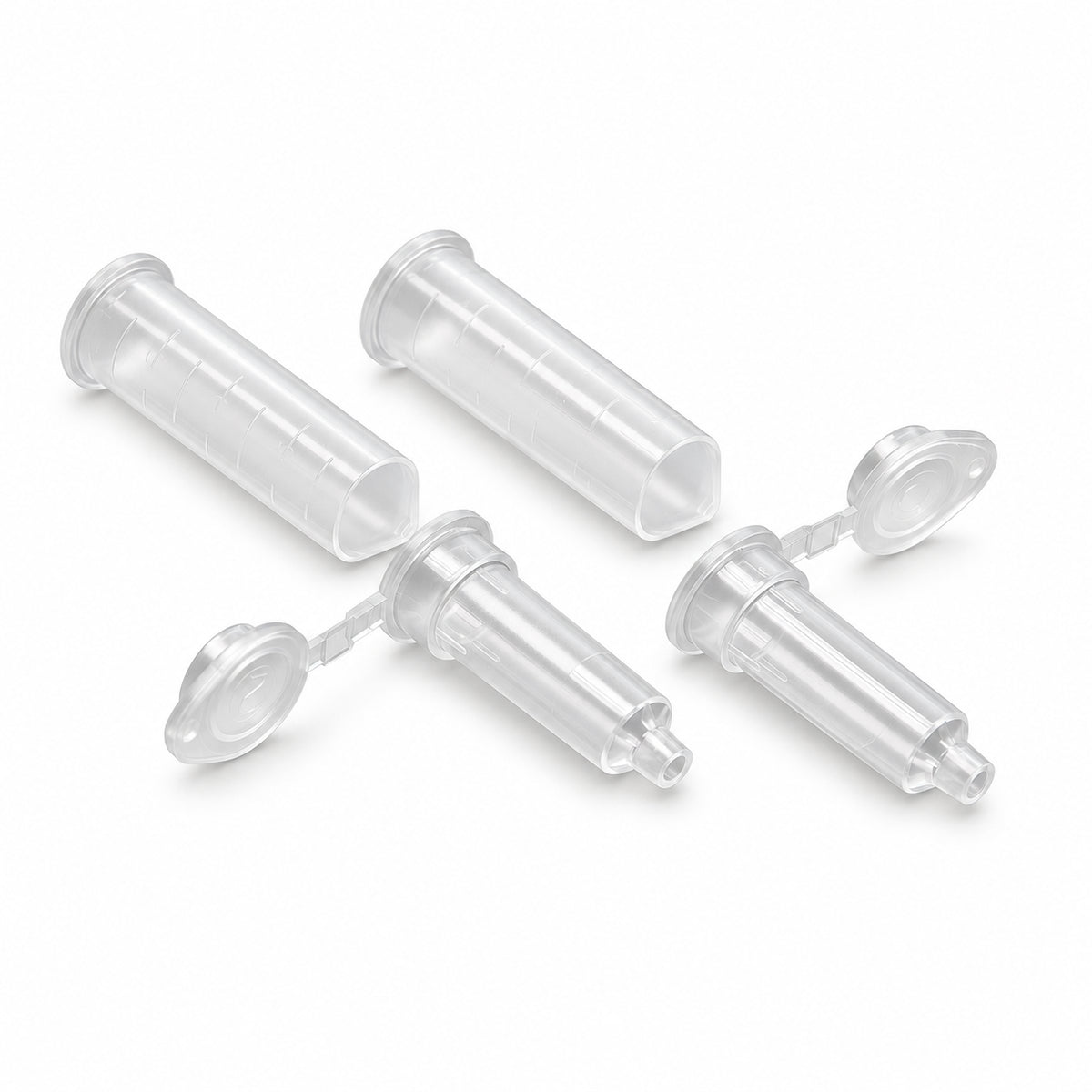
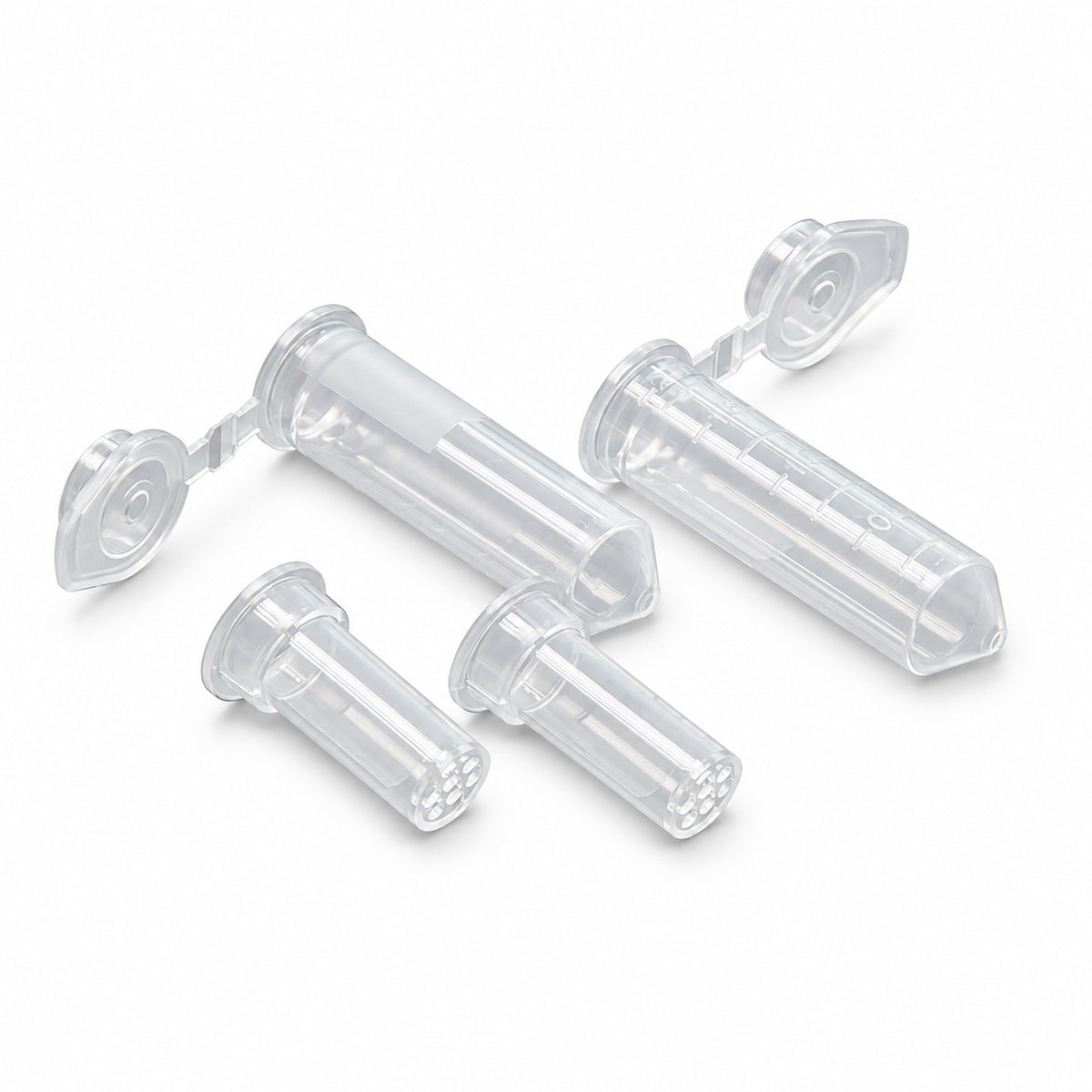
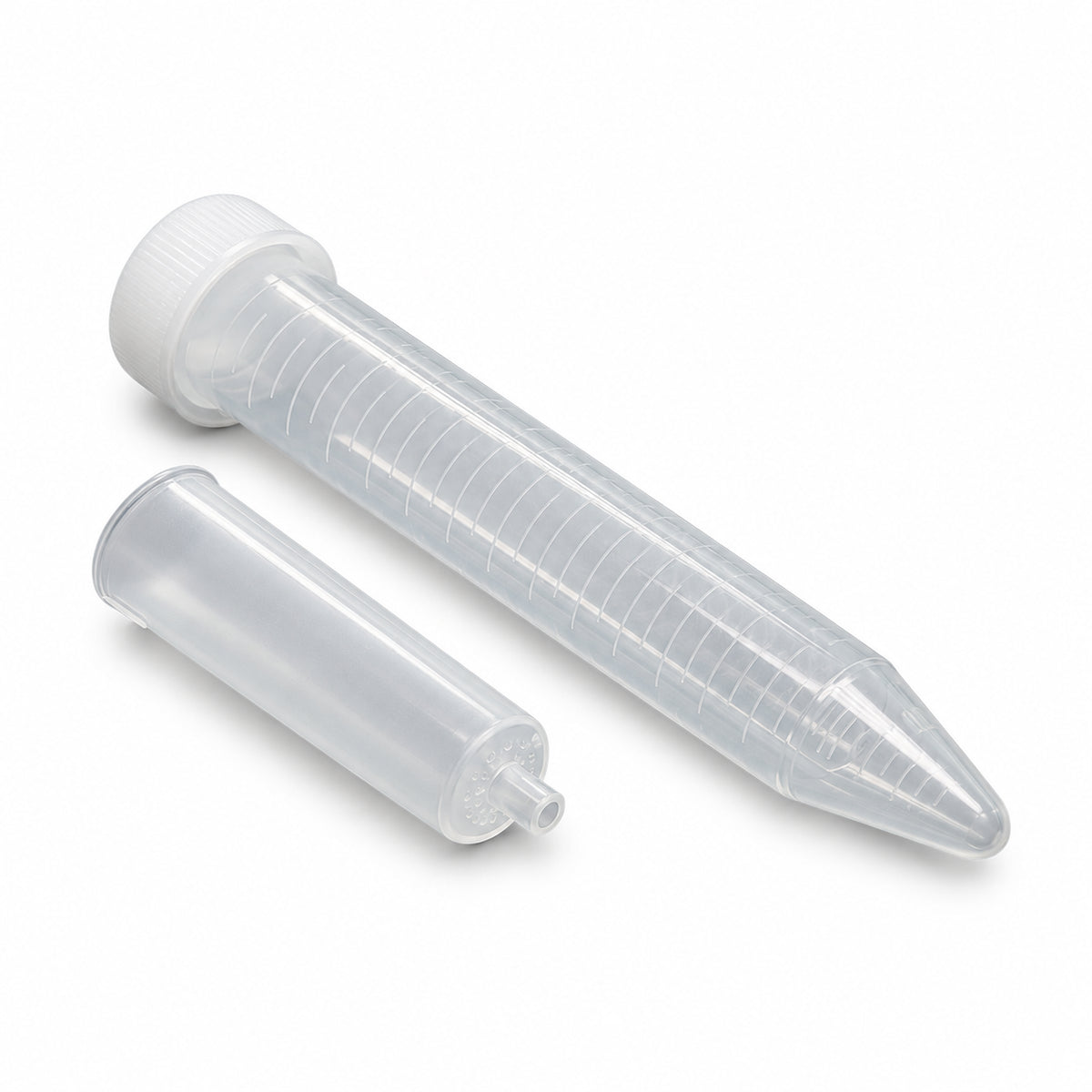
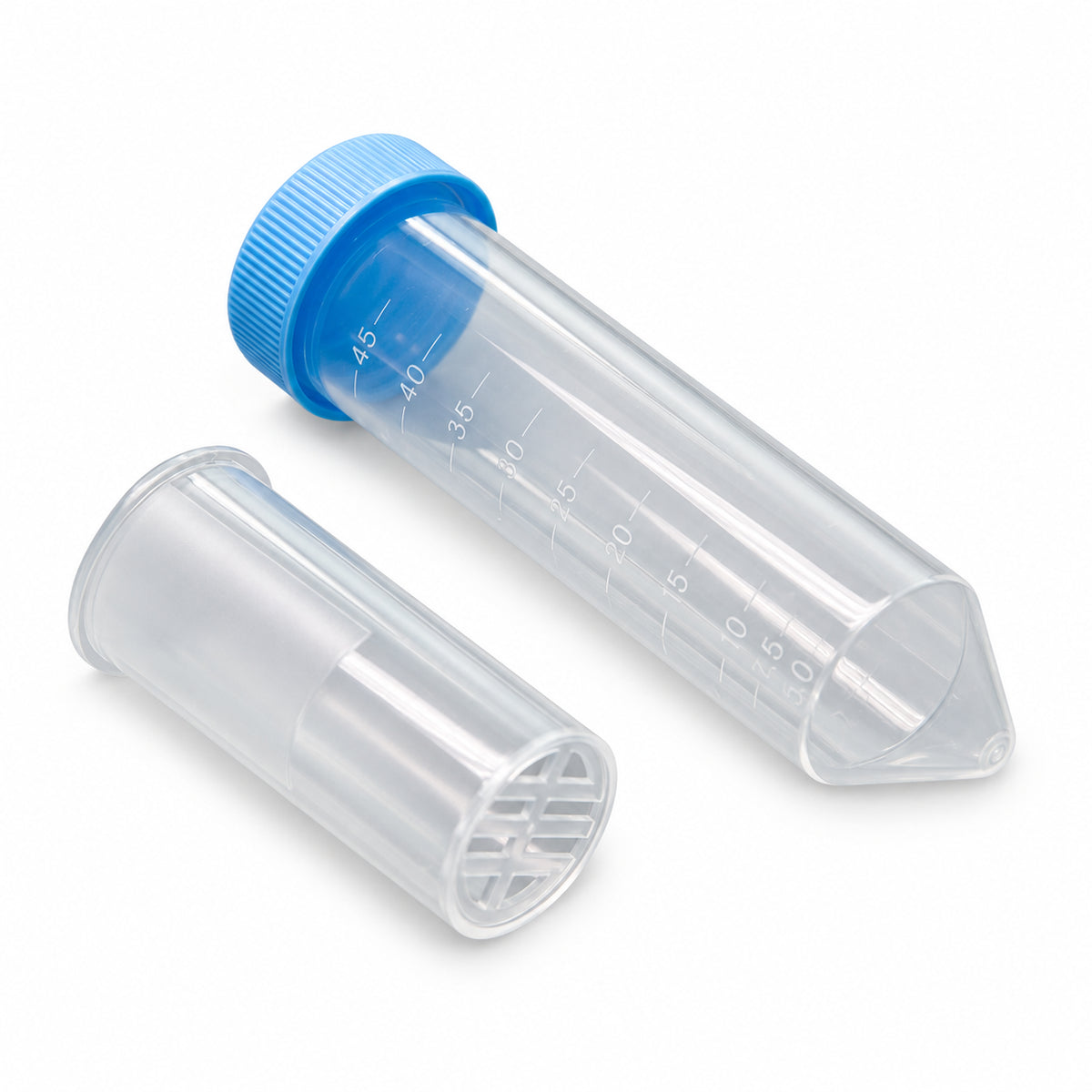
Compare Spin Filter Formats
| Format | Max. sample volume | Hold-up volume | Max. force | Filter OD × length | Receiver OD × length |
|---|---|---|---|---|---|
| Nano | 450 µL | <2 µL | 10,000 × g | 8.87 × 28.53 mm | 10.38 × 37.97 mm |
| Micro | 850 µL | <5 µL | 10,000 × g | 8.13 × 23.64 mm | 10.55 × 38.10 mm |
| Midi | 5 mL | <10 µL | 5,000 × g | 13.35 × 67.80 mm | 16.8 × 120 mm |
| Maxi | 25 mL | <20 µL | 2,500 × g | 24.6 × 60 mm | 29.3 × 114.5 mm |
OD means outside diameter. Nano and Micro use 3 mm and 7.02 mm membranes, respectively. Maxi uses a fixed-angle rotor and is listed for operation up to 50 °C. Confirm the specifications and rotor fit for your selected item.
Membrane Selection Guide
Nylon
Hydrophilic with broad chemical compatibility. An option for aqueous clarification and HPLC sample preparation.
Polypropylene (PP)
Hydrophobic with low extractables. Consider for compatible solvents, low-wavelength HPLC detection, or ion chromatography.
Cellulose Acetate (CA)
Hydrophilic with low protein binding. Consider for protein- or enzyme-containing samples.
PTFE
Hydrophobic and compatible with many aggressive solvents. Check the rating for the specific chemical and concentration.
Nitrocellulose
Hydrophilic with high binding capacity. An option for aqueous clarification and particulate capture.
Polyethersulfone (PES)
Fast flow, low protein binding, and low extractables. An option for aqueous or protein-containing samples.
Polyvinylidene Fluoride (PVDF)
Hydrophilic with low extractables and low protein binding. No wetting agent is required. Applications include HPLC mobile-phase filtration, GC sample preparation, and clarification of protein-containing samples.
- Listed pore sizes are 0.22 and 0.45 µm.
- USP Class VI testing passed.
- BSA protein binding is approximately 4 µg/cm².
- Membrane thickness is 110–125 µm.
- Maximum membrane operating temperature is 85 °C (185 °F).
- Listed membrane sterilization methods are gamma irradiation and ethylene oxide (EtO).
| Pore size in test table | Water flow¹ | Air flow² | Bubble point |
|---|---|---|---|
| 0.20 µm | 7.0 | 2.0 | 56.0 psi |
| 0.45 µm | 29.0 | 4.0 | 25.0 psi |
¹ Water flow in mL/min/cm² at 13 psi. ² Air flow in L/min/cm² at 10 psi.
The source lists 0.22 µm in the product description and 0.20 µm in its performance table. Confirm the rating for the selected item before applying those figures.
Regenerated Cellulose (RC)
Hydrophilic, asymmetric cellulose membrane reinforced with nonwoven cellulose. It wets spontaneously without a wetting agent and combines good wet strength with low adsorption, protein binding, and extractables. The source lists pH 3–12 for the membrane and describes use for particle removal from compatible aqueous and organic solvents.
| Pore size | Thickness | Bubble point | Water flow (mL/min/cm²/bar) |
|---|---|---|---|
| 0.2 µm | 170 µm | 4.4 bar | 15 |
| 0.45 µm | 170 µm | 2.9 bar | 30 |
Separate 1 µm Membrane Reference
The source also lists a hydrophilic, autoclavable 1 µm cellulose membrane with an air-flow test result of 12.5 seconds per 100 mL at 3 mbar differential pressure and a water-flow result of 3 seconds per 100 mL through 12.5 cm² at 0.9 bar differential pressure.
Membrane properties and test values apply to the membrane itself. Confirm limits and sterilization options for the assembled filter device separately.
Membrane Chemical Compatibility
C Compatible · L Limited · N Not compatible · – No data
Ratings are reproduced from Ciro’s supplied reference chart at the listed concentrations. Confirm suitability for your exact membrane grade, assembled device, and operating conditions. The chart lists polysulfone, which is distinct from polyethersulfone (PES).
Acids (11)
| Chemical | Nylon | PTFE | PVDF | Polysulfone | Cellulose Acetate | Polypropylene | Regenerated Cellulose |
|---|---|---|---|---|---|---|---|
| Acetic, 25% | L | C | C | C | L | C | C |
| Acetic, Glacial | L | C | C | C | N | C | C |
| Formic, 25% | N | C | C | C | L | C | C |
| Hydrochloric, 25% | L | C | C | C | C | C | C |
| Hydrochloric, Concentrated | N | N | C | C | N | C | C |
| Sulfuric, 25% | N | C | C | C | N | C | C |
| Sulfuric, Concentrated | N | C | L | N | N | C | L |
| Nitric, 25% | N | C | L | L | L | C | C |
| Nitric, Concentrated | N | C | L | N | N | L | N |
| Phosphoric, 25% | N | C | C | C | C | C | C |
| Trichloroacetic, 10% | L | C | C | C | C | C | C |
Bases (2)
| Chemical | Nylon | PTFE | PVDF | Polysulfone | Cellulose Acetate | Polypropylene | Regenerated Cellulose |
|---|---|---|---|---|---|---|---|
| Ammonium Hydroxide, 25% | C | C | L | C | C | C | – |
| Sodium Hydroxide, 3 Normal | C | C | C | C | N | C | – |
Alcohols (11)
| Chemical | Nylon | PTFE | PVDF | Polysulfone | Cellulose Acetate | Polypropylene | Regenerated Cellulose |
|---|---|---|---|---|---|---|---|
| Amyl Alcohol | C | C | C | C | N | C | C |
| Benzyl Alcohol | C | C | C | N | L | C | C |
| Butyl Alcohol | C | C | C | C | C | C | C |
| Ethanol, 70% | C | C | C | C | C | C | C |
| Ethanol, 98% | C | C | C | C | C | C | C |
| Ethylene Glycol | C | C | C | C | C | C | C |
| Glycerine (Glycerol) | C | C | C | C | C | C | C |
| Isopropanol | C | C | C | C | C | C | C |
| Methanol, 98% | C | C | C | C | C | C | C |
| n-Propanol | C | C | C | C | C | C | C |
| Propylene Glycol | C | C | C | C | L | C | C |
Hydrocarbons (5)
| Chemical | Nylon | PTFE | PVDF | Polysulfone | Cellulose Acetate | Polypropylene | Regenerated Cellulose |
|---|---|---|---|---|---|---|---|
| Benzene | C | C | C | N | C | N | C |
| Hexane, Xylene | C | C | C | N | C | L | C |
| Kerosene, Gasoline | C | C | C | L | C | L | C |
| Tetralin, Decalin | C | C | C | N | C | L | – |
| Toluene | C | C | C | N | C | L | C |
Halogenated Hydrocarbons (7)
| Chemical | Nylon | PTFE | PVDF | Polysulfone | Cellulose Acetate | Polypropylene | Regenerated Cellulose |
|---|---|---|---|---|---|---|---|
| Carbon Tetrachloride | C | C | C | N | L | L | C |
| Chlorobenzene (Mono) | C | C | C | L | C | C | C |
| Chloroform | L | C | C | N | N | L | C |
| Freon | C | C | C | L | C | C | C |
| Methylene Chloride | L | C | C | N | N | L | C |
| Trichloroethane | C | C | C | N | L | L | C |
| Trichloroethylene | C | C | C | N | C | L | C |
Ketones (5)
| Chemical | Nylon | PTFE | PVDF | Polysulfone | Cellulose Acetate | Polypropylene | Regenerated Cellulose |
|---|---|---|---|---|---|---|---|
| Acetone | C | C | N | N | N | C | C |
| Cyclohexanone | C | C | N | N | N | C | C |
| Isopropylacetone | C | C | N | N | C | – | – |
| Methyl Ethyl Ketone | C | C | L | N | L | C | C |
| Methyl Isobutyl Ketone (MIBK) | C | C | N | N | C | L | C |
Esters (11)
| Chemical | Nylon | PTFE | PVDF | Polysulfone | Cellulose Acetate | Polypropylene | Regenerated Cellulose |
|---|---|---|---|---|---|---|---|
| 2-Ethoxyethyl Acetate | L | L | L | N | L | – | C |
| Amyl Acetate | C | C | C | N | L | L | C |
| Benzyl Benzoate | C | C | – | N | C | – | C |
| Butyl Acetate | C | C | C | N | L | L | C |
| Ethyl Acetate | C | C | C | N | N | L | C |
| Isopropyl Myristate | C | C | – | N | C | – | C |
| Methyl Acetate | L | C | L | N | N | L | C |
| Propyl Acetate | L | N | C | N | N | L | C |
| Propylene Glycol Acetate | L | C | – | N | N | C | C |
| Methyl Cellosolve Acetate | C | C | C | N | N | C | C |
| Tricresyl Phosphate | – | C | – | N | C | – | C |
Oxides — Ethers (9)
| Chemical | Nylon | PTFE | PVDF | Polysulfone | Cellulose Acetate | Polypropylene | Regenerated Cellulose |
|---|---|---|---|---|---|---|---|
| Acetonitrile (Methyl Cyanide) | C | C | C | N | N | C | C |
| Aniline | L | C | C | N | N | L | C |
| Diethyl Acetamide | C | C | C | – | N | – | C |
| Dimethyl Formamide | C | C | N | N | N | C | L |
| Dimethyl Sulfoxide (DMSO) | L | C | C | N | N | C | L |
| Dioxane | C | C | L | N | N | C | L |
| Ethyl Ether | C | C | C | C | L | L | C |
| Isopropyl Ether | C | C | N | C | C | C | – |
| Pyridine | C | C | L | N | N | L | C |
Solvents with Nitrogen (2)
| Chemical | Nylon | PTFE | PVDF | Polysulfone | Cellulose Acetate | Polypropylene | Regenerated Cellulose |
|---|---|---|---|---|---|---|---|
| Tetrahydrofuran | C | C | L | N | N | C | L |
| Triethanolamine | C | C | C | – | C | – | C |
Miscellaneous (4)
| Chemical | Nylon | PTFE | PVDF | Polysulfone | Cellulose Acetate | Polypropylene | Regenerated Cellulose |
|---|---|---|---|---|---|---|---|
| Formaldehyde Solution, 30% | C | C | C | C | L | C | L |
| Hydrogen Peroxide, 30% | N | C | C | C | C | C | C |
| Phenol, Aqueous, 10% | N | C | L | N | N | C | C |
| Silicone Oil & Mineral Oil | C | C | C | C | C | C | C |
Application Notes
Ciro’s spin filters use polypropylene housings and graduated receiver tubes. On applicable models, the cap closes the sample chamber during centrifugation and the receiver tube afterward. Filtration rate varies with sample viscosity, concentration, temperature, and centrifugal force. Products ship non-sterile and can be stored at ambient temperature.
Need Help Choosing a Filter?
Share your sample volume, chemistry, desired pore size, and centrifuge or rotor model.
Talk to Ciro